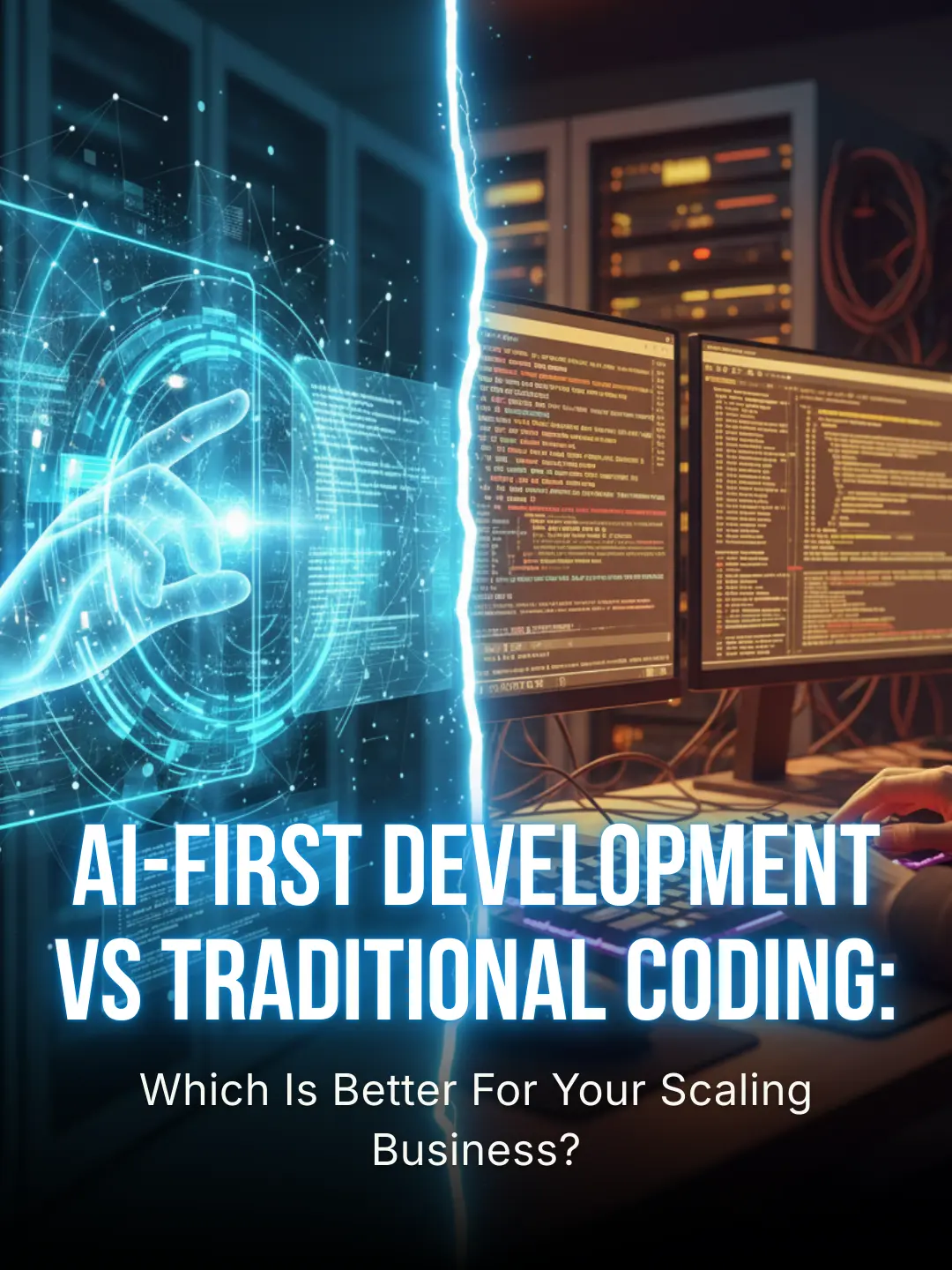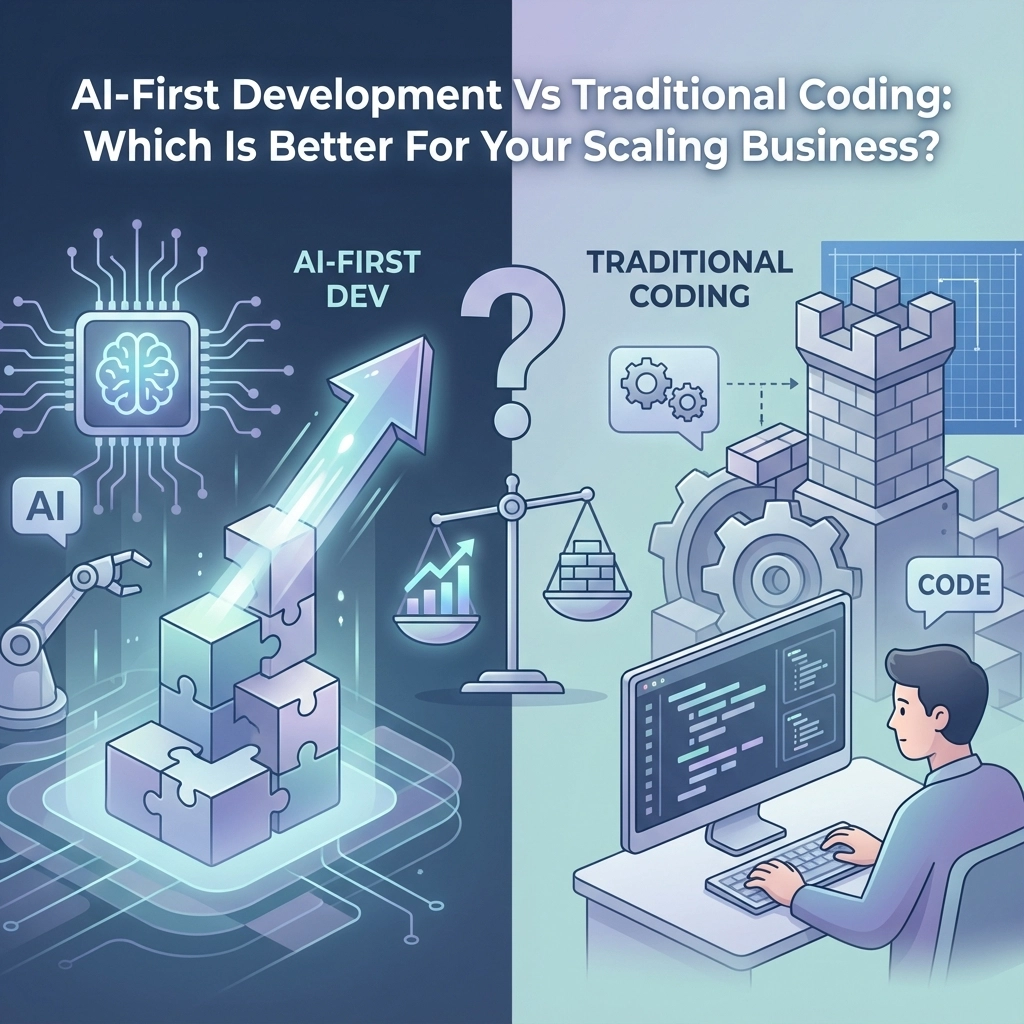
Let's cut to the chase: you're growing fast, and you need to decide how to build your next features. Should you go all-in on AI-powered development tools, or stick with traditional coding methods? OOPS, here's the thing: there's no universal answer, but there's definitely a right choice for YOUR specific situation.
The development landscape has shifted dramatically in 2026. AI-first development platforms can now build applications in days instead of months, while traditional coding still offers the precision and control that complex systems demand. So which path should your scaling business take?
What AI-First Development Actually Means
AI-first development isn't just about using ChatGPT to write code snippets. We're talking about platforms that leverage artificial intelligence throughout the entire development lifecycle: from requirements gathering to deployment and maintenance.
These platforms can automatically generate databases, create user interfaces, implement business logic, and even handle scaling infrastructure. Think of it as having a super-powered development team that never sleeps and costs a fraction of traditional developer salaries.

The productivity gains are real. Companies using AI-first approaches report at least 300% increases in development speed. But here's the catch: you still need to know what you're building. Junior developers often struggle with these tools because they lack the experience to properly guide the AI toward the right solutions.
The Traditional Coding Advantage
Traditional coding follows a more methodical approach. Developers write custom code, design specific architectures, and have complete control over every aspect of the application. This means longer development cycles but also more predictable outcomes.
When your business requires specialized functionality, complex integrations with existing systems, or performance optimizations that push technical boundaries, traditional coding shines. You're not limited by platform capabilities or AI training data: you can build exactly what your business needs.

Traditional development also excels in areas where reliability and security are non-negotiable. The structured approach, comprehensive testing, and careful architecture planning result in robust systems that can handle enterprise-scale demands without unexpected failures.
Speed vs. Control: The Real Trade-Off
Here's where things get interesting. AI-powered platforms can create business applications in days to weeks compared to months for traditional coding. For a scaling business, this speed advantage can be the difference between capturing market opportunities and watching competitors beat you to launch.
But speed comes with limitations. AI platforms excel at standard business workflows, customer portals, and common application patterns. When you need something that hasn't been built a thousand times before, you'll hit platform restrictions quickly.
Traditional coding takes longer upfront but offers unlimited flexibility. If your competitive advantage depends on unique technical capabilities, the extra development time might be worth the investment.
The Cost Equation Changes as You Scale
Let's talk money. AI-first development operates on subscription models with predictable monthly costs. Traditional coding involves developer salaries, infrastructure management, ongoing maintenance, and constant updates: costs that scale linearly with your team size.
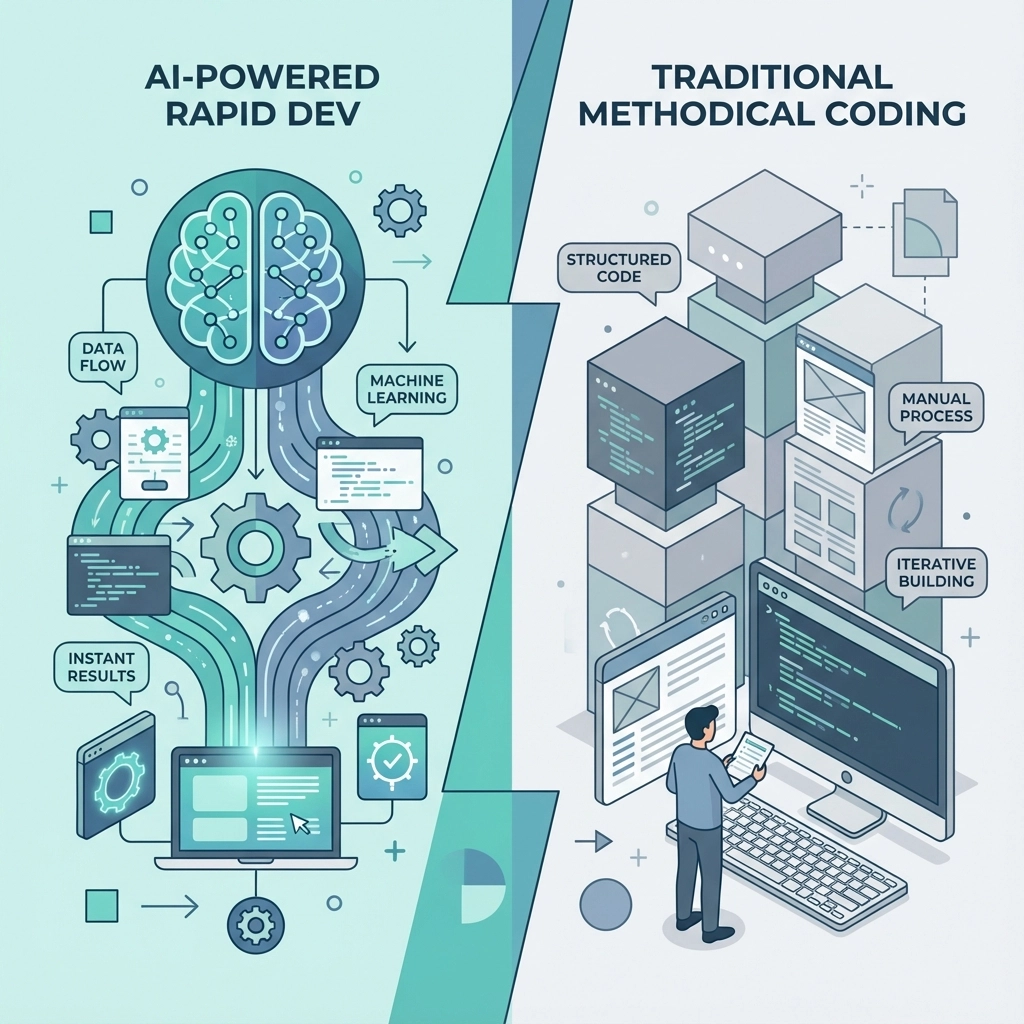
For early-stage companies, AI platforms can provide significant cost advantages. You're paying for results, not hours, and the platform handles infrastructure scaling automatically. But as you grow, the calculation changes. Large enterprises often find that maintaining in-house development teams becomes more cost-effective, especially when building core systems that define their business.
When to Choose AI-First Development
AI-first development works exceptionally well for:
New projects with standard requirements: Customer dashboards, content management systems, e-commerce platforms, and business workflow applications are perfect fits. The AI has seen these patterns countless times and can implement them efficiently.
Rapid prototyping: When you need to test ideas quickly or demonstrate concepts to stakeholders, AI platforms let you build working prototypes in hours instead of weeks.
Non-technical teams: Marketing teams wanting to build landing pages, sales teams needing CRM customizations, or operations teams creating internal tools can often use AI platforms without extensive technical knowledge.
Time-critical projects: When market timing is everything, the speed advantage of AI-first development can be decisive.
When Traditional Coding Still Wins
Traditional coding remains the better choice for:
Performance-critical systems: Applications that need to handle massive scale, real-time processing, or complex algorithms often require custom optimization that AI platforms can't provide.
Security-sensitive applications: Financial systems, healthcare platforms, and applications handling sensitive data benefit from the complete control and custom security implementations that traditional coding offers.
Complex integrations: When you need to connect with legacy systems, implement custom protocols, or integrate with specialized hardware, traditional coding provides the flexibility you need.
Long-term competitive advantages: If your technology stack is a key differentiator, maintaining full control through traditional development protects your competitive moats.

The Hybrid Approach: Best of Both Worlds
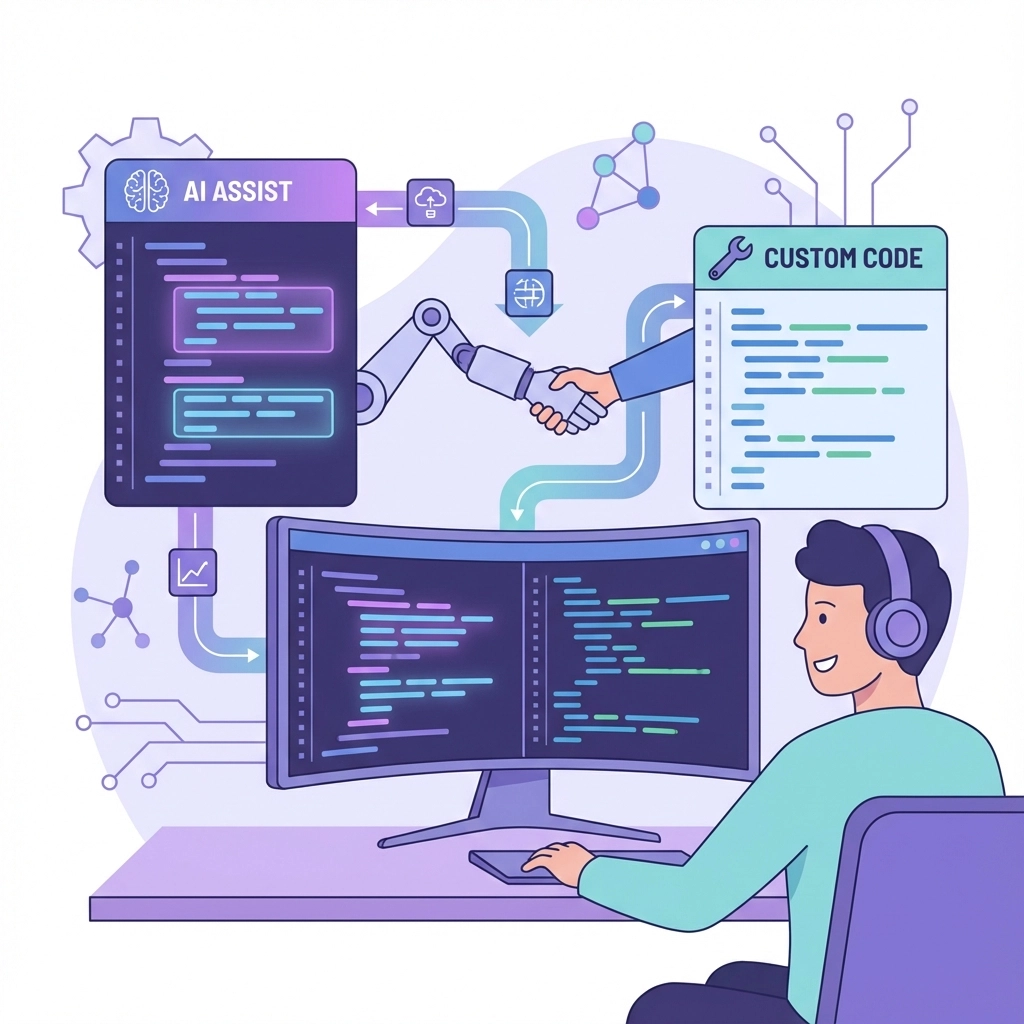
Here's what most successful scaling businesses actually do: they combine both approaches strategically. Traditional development augmented with AI tools offers significant speed improvements while maintaining control over critical systems.
Use AI-powered tools like GitHub Copilot to accelerate traditional coding. Build your core platform with traditional methods but use AI-first development for customer-facing features, internal tools, and rapid experiments.
This hybrid approach lets you maintain technical excellence where it matters while gaining speed advantages for standard functionality. You're not locked into either paradigm: you're choosing the right tool for each specific job.
Making the Right Choice for Your Business
Start by auditing your current development needs. What percentage of your roadmap consists of standard business applications versus specialized technical requirements? How important is time-to-market versus long-term technical control?
For most scaling businesses, the answer isn't choosing one approach exclusively. Instead, develop competency in both areas. Use AI-first development to accelerate standard features and free up your traditional development resources for the complex, differentiated work that drives your competitive advantage.
The development landscape will continue evolving rapidly. AI platforms are becoming more capable, while traditional coding tools are incorporating more AI assistance. The businesses that succeed will be those that master both approaches and apply them strategically rather than dogmatically.
Your scaling business doesn't need to choose sides in the AI-first versus traditional coding debate. It needs to choose the right approach for each project, each timeline, and each strategic goal. Master both tools, and you'll be prepared for whatever technical challenges your growth brings.